top of page
All Videos
All Categories
Play Video
Play Video
03:55
8 Ways To Keep Your Teeth Healthy
. Chapters 0:00 Introduction 0:23 Picking a toothbrush 0:38 Picking a toothpaste 1:15 Flossing 1:54 Rinsing 2:11 Don't forget the tongue 2:28 Drink more water 2:42 Avoid sugary foods and drinks Oral hygiene is the practice of keeping one's mouth clean and free of disease and other problems (e.g. bad breath) by regular brushing of the teeth (dental hygiene) and cleaning between the teeth. It is important that oral hygiene be carried out on a regular basis to enable prevention of dental disease and bad breath. The most common types of dental disease are tooth decay (cavities, dental caries) and gum diseases, including gingivitis, and periodontitis. General guidelines for adults suggest brushing at least twice a day with a fluoridated toothpaste: brushing last thing at night and at least on one other occasion.[2] Cleaning between the teeth is called interdental cleaning and is as important as tooth brushing.[3] This is because a toothbrush cannot reach between the teeth and therefore only removes about 50% of plaque from the surface of the teeth.[4] There are many tools to clean between the teeth, including floss, tape and interdental brushes; it is up to each individual to choose which tool they prefer to use. Sometimes white or straight teeth are associated with oral hygiene. However, a hygienic mouth can have stained teeth or crooked teeth. To improve the appearance of their teeth, people may use tooth whitening treatments and orthodontics. A healthy smile The importance of the role of the oral microbiome in dental health has been increasingly recognized.[5][6][7] Data from human oral microbiology research shows that a commensal microflora can switch to an opportunistic pathogenic flora through complex changes in their environment.[8] These changes are driven by the host rather than the bacteria.[9] Archeological evidence of calcified dental plaque shows marked shifts in the oral microbiome towards a disease-associated microbiome with cariogenic bacteria becoming dominant during the Industrial Revolution.[10][11] Modern oral microbiota are significantly less diverse than historic populations.[10] Caries (Cavities), for example, have become a major endemic disease, affecting 60-90% of schoolchildren in industrialized countries.[12] In contrast, dental caries and periodontal diseases were rare in pre-Neolithic and early hominins.[11][13]
Play Video
Play Video
03:09
Here's What Happens If You Stopped Brushing Your Teeth
Nearly half of Americans don’t brush their teeth enough. This opens the door for a bacteria invasion, leading to tooth decay and gum disease. Even worse, you might increase your risk for issues like kidney disease and dementia. ------------------------------------------------------ Science Insider tells you all you need to know about science: space, medicine, biotech, physiology, and more. Subscribe to our channel and visit us at: http://www.businessinsider.com/science Science Insider on Facebook: https://www.facebook.com/BusinessInsiderScience/ Science Insider on Instagram: https://www.instagram.com/science_insider/ Business Insider on Twitter: https://twitter.com/businessinsider Tech Insider on Twitter: https://twitter.com/techinsider ------------------------------------------------------ Following is a transcript of the video: Nearly half of Americans don’t brush their teeth enough. This opens the door for a bacteria invasion, leading to tooth decay and gum disease. Even worse, you might increase your risk for issues like kidney disease and dementia. The following is a transcript of the video. Meet Streptococcus mutans. He’s a bacterium and…a bit of a slob. But this isn’t just any mess. It’s what’s on your teeth! You see, “Strep” and all his roommates live inside your mouth, feeding off the sugar and protein in your food. When they’re done they excrete a slimy substance ALL OVER your pearly whites. The end result is a bacteria-ridden pigsty, called biofilm. Now a little biofilm isn’t going to hurt you. It’s only when you stop brushing it away that things can get ugly. And not only for your teeth. It just so happens that “Strep” and his friends are a downright threat to your life. Nearly half of Americans don’t brush their teeth enough. And when food builds up in those nooks and crannies, you’re inviting a host of bacteria to the party — including your gum line. The perfect place for bacteria to camp out in even greater numbers! Which irritate and inflame your gums, causing tenderness and bleeding. But that’s just the start! Soon enough, that infection will trigger your immune system. Which sends fighter cells to battle the bacteria. This creates a hostile environment for the bacteria, which is what you want. But it can also damage the cells in nearby tissue and bone. 6 months to years later, that tissue and bone will eventually die. At this point, you don’t have gingivitis anymore. You have something much worse: periodontal disease. No more tissue and bone means no structural support. So, your gums separate from your teeth forming pockets that quickly become extra space for “Strep” and his friends. Which further infects your gums, causing your teeth to fall out. Now, you may think this could never happen to you but about 10% of Americans between ages 50-64 have lost not just one or two, but ALL of their teeth! And to make matters worse, “Strep” and his buddies may enter your bloodstream, where they’ll wreak havoc on your organs, too. For example, in one study, people with periodontal disease were 4.5 times more likely to have chronic kidney disease than people with healthy gums. And another study found that people in a retirement community who didn’t brush their teeth daily, had up to a 65% greater risk of dementia. Last but not least, there’s the increased risk of developing certain cancers: To be fair, these risks can also be the result of poor hygiene in general, but the message remains clear: Brush. Your. Teeth. It’s worth the extra 4 minutes a day.
Play Video
Play Video
04:19
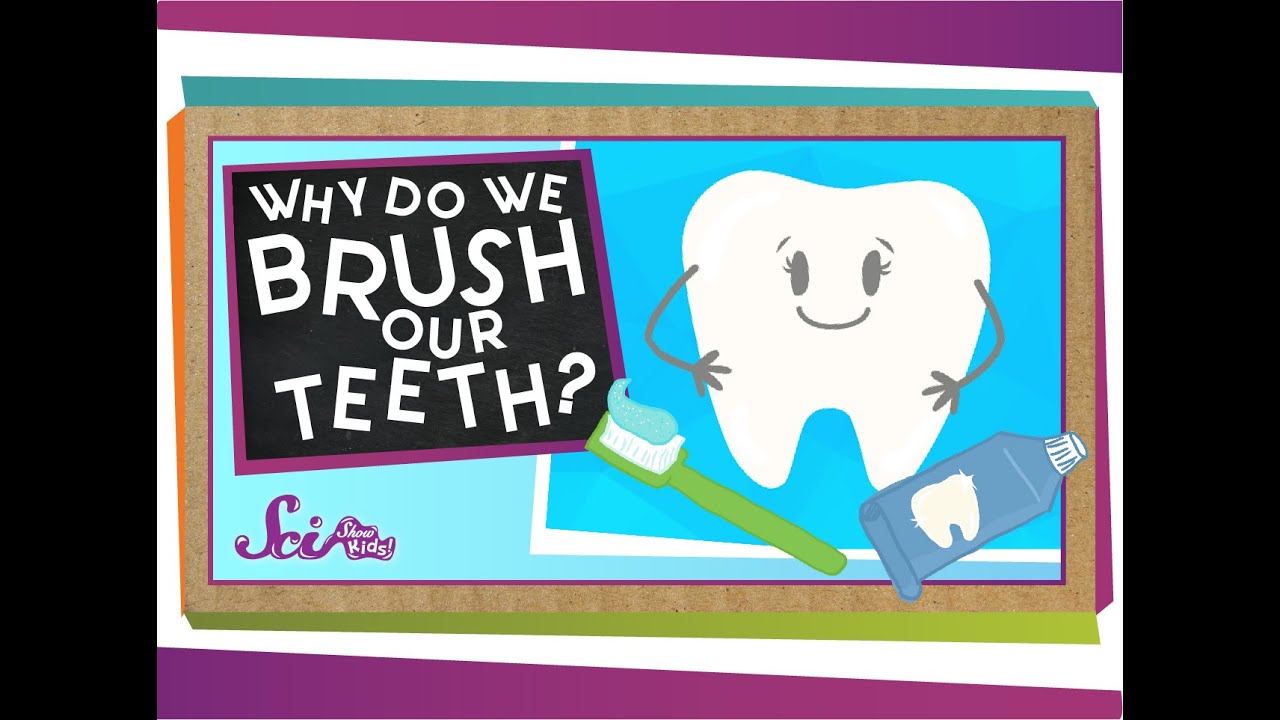
Why do We Brush Our Teeth? | Health for Kids | SciShow Kids
We all need to do it! Learn why we all should brush our teeth, and how brushing keeps our teeth strong and healthy! ---------- Like SciShow? Want to help support us, and also get things to put on your walls, cover your torso and hold your liquids? Check out our awesome products over at DFTBA Records: http://dftba.com/SciShow Or help support us by becoming our patron on Patreon: https://www.patreon.com/scishow #scienceforkids #dentist #teeth #health #brushteeth #toothbrush #science #education #elementary #learning ---------- Looking for SciShow elsewhere on the internet? Facebook: http://www.facebook.com/scishow Twitter: http://www.twitter.com/scishow Tumblr: http://scishow.tumblr.com Instagram: http://instagram.com/thescishow SOURCES: http://www.ncbi.nlm.nih.gov/pmc/articles/PMC2147593/ http://health.howstuffworks.com/wellness/oral-care/products/when-you-dont-brush-teeth.htm http://news.wisc.edu/13760 http://onlinelibrary.wiley.com/doi/10.1111/jcpe.12368/full http://mentalfloss.com/article/51348/what-causes-morning-breath
bottom of page